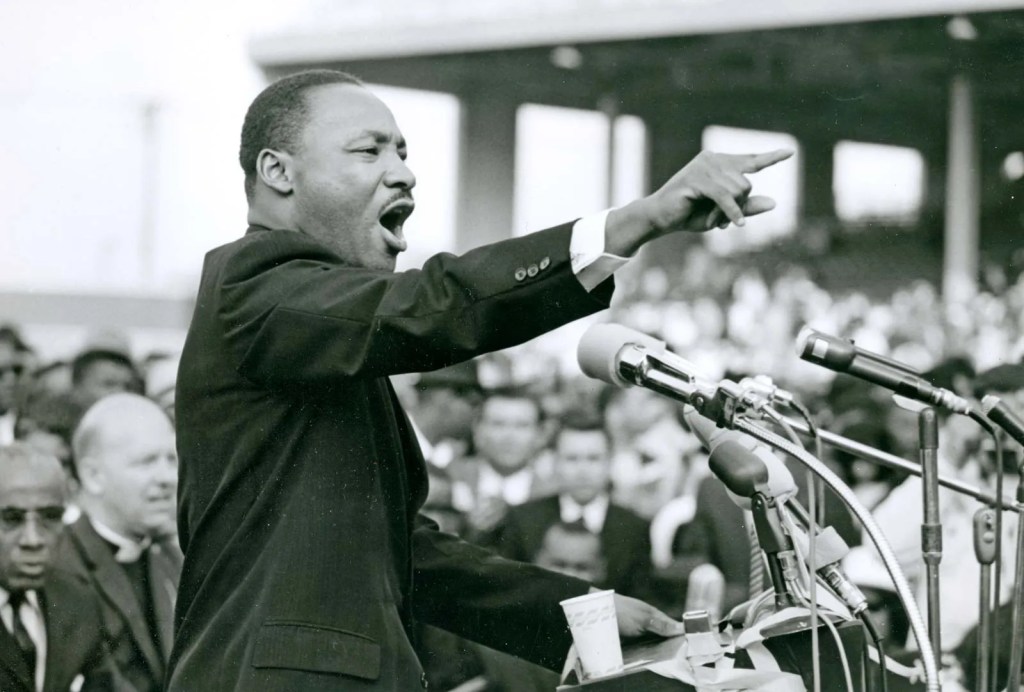
In my dissertation and first book project, I offer the first conceptual history of civil disobedience by focusing on the historical process by which it has become a key political concept in the United States. I aim thereby to contribute to recent controversies on the ethics and politics of (un)civil disobedience.
In addition to this project, I have written on the political thought of the German anti-Nazi student resistance group “The White Rose,” ideas of forbiddenness and transgression in Jewish political theology, Evangelical conceptions of (dis)obedience to God, poverty and resistance in the history of political thought, the politics of social movements against airport construction and expansion, the meanings of the idea of the state monopoly on violence, and the political phenomenon I call Gandhian Bolsonarism.
In my most recent work, I have explored how HIV/AIDS activism and queer civil disobedience have enriched our political repertoire since the late 1980s and reframed the relationship between health and political freedom in an original fashion. One of my essays on this topic has appeared in GLQ: A Journal of Lesbian and Gay Studies. In another recent essay, I discuss how radical democrats have appropriated liberal genealogies of civil disobedience in uncritical ways, whilst in an article recently published in a special issue of the Annual Review of Law and Ethics, I probe the elective affinities between conservative and liberal approaches to civil disobedience. I also explore the key role of British pluralism in the history of civil disobedience in an article for The Tocqueville Review (accepted with minor revisions). In “Global Gandhi,” a Critical Exchange for Public Culture that I am currently co-authoring with Faisal Devji and Uday Singh Mehta, I discuss in an ethnographic key Gandhi’s reception by contemporary far-right movements. I am also currently editing with Erin Pineda a special issue of the South Atlantic Quarterly on the criminalization and policing of dissent. It will appear in October 2026.
I have a deep interest in interpretative methods, especially ethnography, and the ways in which they can contribute to shedding light on how activists conceptualize civil disobedience and (non)violence. This has led me to explore the relationship between philosophy and anthropological fieldwork in an essay for American Ethnologist. Finally, I delineate in an essay for an edited volume of the Friedrich Ebert Foundation my research agenda to explore how the Brazilian far right has mobilized the concepts of civil disobedience and nonviolence in its rhetoric.

In Lausanne, I contributed to the drafting of a Swiss National Science Foundation research project on the history and politics of militant democracy.
Militant democracy refers to the adoption of illiberal measures to protect democracy against efforts to subvert it. These measures typically include restrictions on the right of participation of antidemocratic political actors and bans on political parties and associations. With this new project, I aim to contribute—by mobilizing elements from my previous one—to recent debates about whether civil disobedience and other forms of popular resistance can be theorized as militant democracy. I am also interested in the growing tendency to legally frame climate and antiracist disobedience as terrorist activity.
In addition, I explore in this project the relationship between militant democracy and processes of racialization, by tracing the racial underpinnings of the idea that it is necessary to defend the democratic order against its “enemies” or against “threats” to it. In doing so, I aim to shed new light on a series of political phenomena: from African American disenfranchisement to anti-refugee and anti-terrorism policies, from the global spread of Islamophobia, Arabophobia, and Sinophobia to right-wing populism, from the geopolitics of the Mexico-United States border to the political (re)configurations of the carceral state in the form of concentration, detention, and internment camps since WWII.
My third book will be in this sense a genealogical investigation into how militant democracy was originally used during WWII to target individuals of German, Italian, and Japanese descent in the United States, and, with help from Karl Loewenstein, the coiner of the concept of militant democracy, also across Latin America. As historian Udi Greenberg shows in one of the chapters of The Weimar Century: German Émigrés and the Ideological Foundations of the Cold War (2014), Latin American citizens and German Jewish refugees who were deemed dangerous to the hemispheric order were incarcerated or sent to concentration camps in Texas, in the same region President Donald Trump created detention camps for irregular migrants from Latin America during his first term in office. In my monograph, I will reconstruct this history in detail for the first time. In a separate yet related project, my students and I are producing the first database on U.S. concentration, detention, and internment camps.
Academia | PhilPapers | SSRN | ResearchGate | Google Scholar | ORCID
 eraldosouzadossantos.com